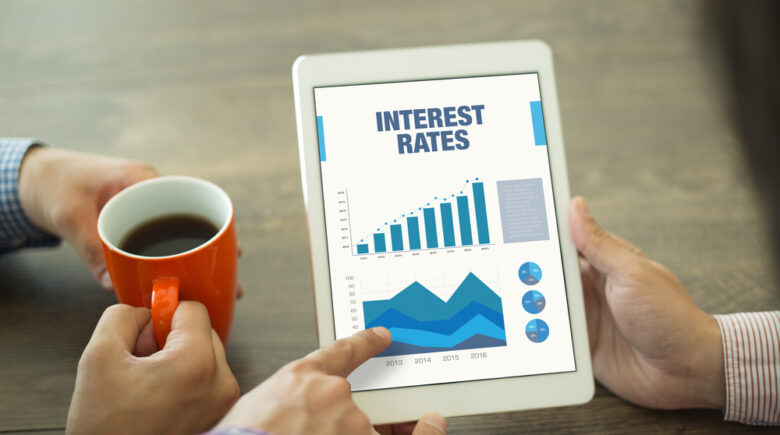
Interest rates are a pervasive element in the financial landscape, and it’s beneficial for everyone to comprehend their nature. This article aims to demystify interest rates, providing a detailed understanding of their significance and how they influence economic behaviors.
What is an Interest Rate?
An interest rate essentially serves as the cost for borrowing money, expressed as a percentage of the loan amount. Commonly, this rate is annualized and referred to as the “annual percentage rate” or APR.
How Are Interest Rates Determined?
Interest rates are frequently discussed in economic news, often in relation to the actions of a country’s central bank. In the United States, the Federal Reserve (or “the Fed”) is responsible for setting these rates. The Fed adjusts interest rates to influence economic activity; for instance, increasing rates to curb excessive consumer demand during inflationary periods, thereby making borrowing more expensive and reducing spending. Conversely, in times of economic downturn, the Fed may lower rates to make borrowing cheaper, encouraging spending and investment to stimulate the economy.
Simple Interest Rate Explained
Consider a scenario where an individual named Bill secures a $200,000 loan at a 4% interest rate. If this loan is for one year, Bill pays $8,000 in interest, totaling $208,000 repaid to the bank. For a 30-year mortgage, the interest totals $240,000, equating to $8,000 annually over three decades.
Annual Percentage Yield (APY)
Different from APR, the APY is the rate at which savings accounts and certificates of deposit grow. Banks and credit unions compound this interest, meaning the interest itself earns additional interest, enhancing the growth of the deposits over time.
Compound Interest Rate
Compound interest is calculated on both the initial principal and the accumulated interest from previous periods. This means borrowers owe more over time as interest builds on interest. For example, depositing $500,000 in a high-yield savings account allows the bank to utilize a portion of these funds for loans, compensating the depositor with a 5% interest annually.
Variability in Interest Rates
Banks set interest rates based on risk assessment and opportunity cost. Longer-term loans like 30-year mortgages typically have higher rates due to the increased risk of default and the lender’s tied-up capital, which could have been used elsewhere.
Implications of Low and High-Interest Rates
While the Federal Reserve sets benchmark interest rates, individual lending rates vary based on underwriting processes that assess creditworthiness. A person with a strong credit history might secure a lower interest rate, indicative of lower risk to the lender. Conversely, someone with poor credit may face higher rates or even loan rejection, reflecting the higher risk of default.
This overview provides clarity on how interest rates function and affect various aspects of economic life, from personal finance to broader economic policies.